
Pistons Shock Celtics in Nail-Biter: A Deep Dive into the Tactics
In a game that will be etched in the memories of Pistons fans for years to come, the Detroit Pistons pulled off a stunning 108-107 victory against the Eastern Conference-leading Boston Celtics. This wasn’t just a win; it was a statement. A statement that the Pistons, led by the burgeoning superstar Cade Cunningham, are a force to be reckoned with. While box scores tell a story, they often lack the nuance of the tactical battles that unfold on the court. This analysis delves into the strategic decisions, key matchups, and pivotal moments that defined this captivating contest.
Offensive Strategies: Pistons’ Balanced Attack vs. Celtics’ Star Power
The Pistons entered the game with a clear offensive game plan: a balanced attack designed to exploit mismatches and keep the Celtics’ defense guessing. Coach emphasized ball movement and player involvement, avoiding the stagnant isolation plays that had plagued them in previous games. This approach allowed players like Jaden Ivey and Ausar Thompson to thrive, using their athleticism to attack the basket and create opportunities for their teammates. The Celtics, on the other hand, heavily relied on the scoring prowess of Jayson Tatum and Jaylen Brown. Their offensive strategy revolved around getting these two players involved early and often, often through isolation plays and pick-and-roll actions.
A key adjustment made by the Pistons was their increased use of pick-and-roll involving Cunningham. Instead of always looking to score, Cunningham effectively used his court vision to find open teammates, especially shooters like Bojan Bogdanovic (assuming he’s still on the team in 2026 or a similar sharpshooter). This forced the Celtics’ defense to rotate, creating further opportunities for the Pistons’ offense. The Celtics struggled to contain Cunningham’s versatility, as he consistently made the right reads and punished them for their defensive lapses.
Defensive Schemes: Pistons’ Aggression vs. Celtics’ Perimeter Threat
Defensively, the Pistons adopted an aggressive strategy aimed at disrupting the Celtics’ rhythm and limiting their three-point opportunities. They employed a variety of defensive looks, including switching pick-and-rolls and trapping Tatum and Brown in the corners. This constant pressure forced the Celtics’ stars into difficult shots and turnovers, preventing them from establishing a comfortable offensive flow. A critical element of the Pistons’ defensive success was their ability to control the paint. Isaiah Stewart’s physical presence and rim protection deterred the Celtics from attacking the basket, forcing them to rely more heavily on their perimeter shooting. While the Celtics are known for their three-point accuracy, the Pistons’ diligent closeouts and contested shots made life difficult for them from beyond the arc.
The Celtics, known for their defensive prowess, faced a tough challenge in containing the Pistons’ diverse offensive attack. Their defensive scheme primarily focused on containing Cunningham and limiting his penetration. However, the Pistons’ supporting cast stepped up, making it difficult for the Celtics to focus solely on their star player. The Celtics’ switching defense occasionally faltered, leading to mismatches that the Pistons effectively exploited. Their inability to consistently contain the Pistons’ dribble penetration also contributed to their defensive struggles.
Key Matchups and Player Performances
The matchup between Cade Cunningham and Jayson Tatum was undoubtedly the most anticipated aspect of the game. Cunningham, showcasing his all-around game, finished with . His ability to score, create for others, and defend at a high level proved crucial to the Pistons’ success. Tatum, despite scoring , struggled with his efficiency due to the Pistons’ relentless defensive pressure. He was forced into tough shots and committed several turnovers, hindering the Celtics’ offensive flow.
Another key matchup was between Isaiah Stewart and Kristaps Porzingis (assuming he’s still a key player in 2026 or a comparable center). Stewart’s physicality and rebounding prowess limited Porzingis’ impact on the game. He effectively boxed him out and contested his shots, preventing him from establishing a dominant presence in the paint. On the other hand, Jaden Ivey’s performance was a revelation. His explosive drives to the basket and timely three-pointers provided a much-needed spark for the Pistons’ offense. He consistently attacked the Celtics’ defense, drawing fouls and creating scoring opportunities for himself and his teammates. Ausar Thompson’s defensive versatility was also a major factor in the Pistons’ victory. He guarded multiple positions effectively, disrupting the Celtics’ offensive sets and creating turnovers with his active hands.
Clutch Moments and Final Possessions
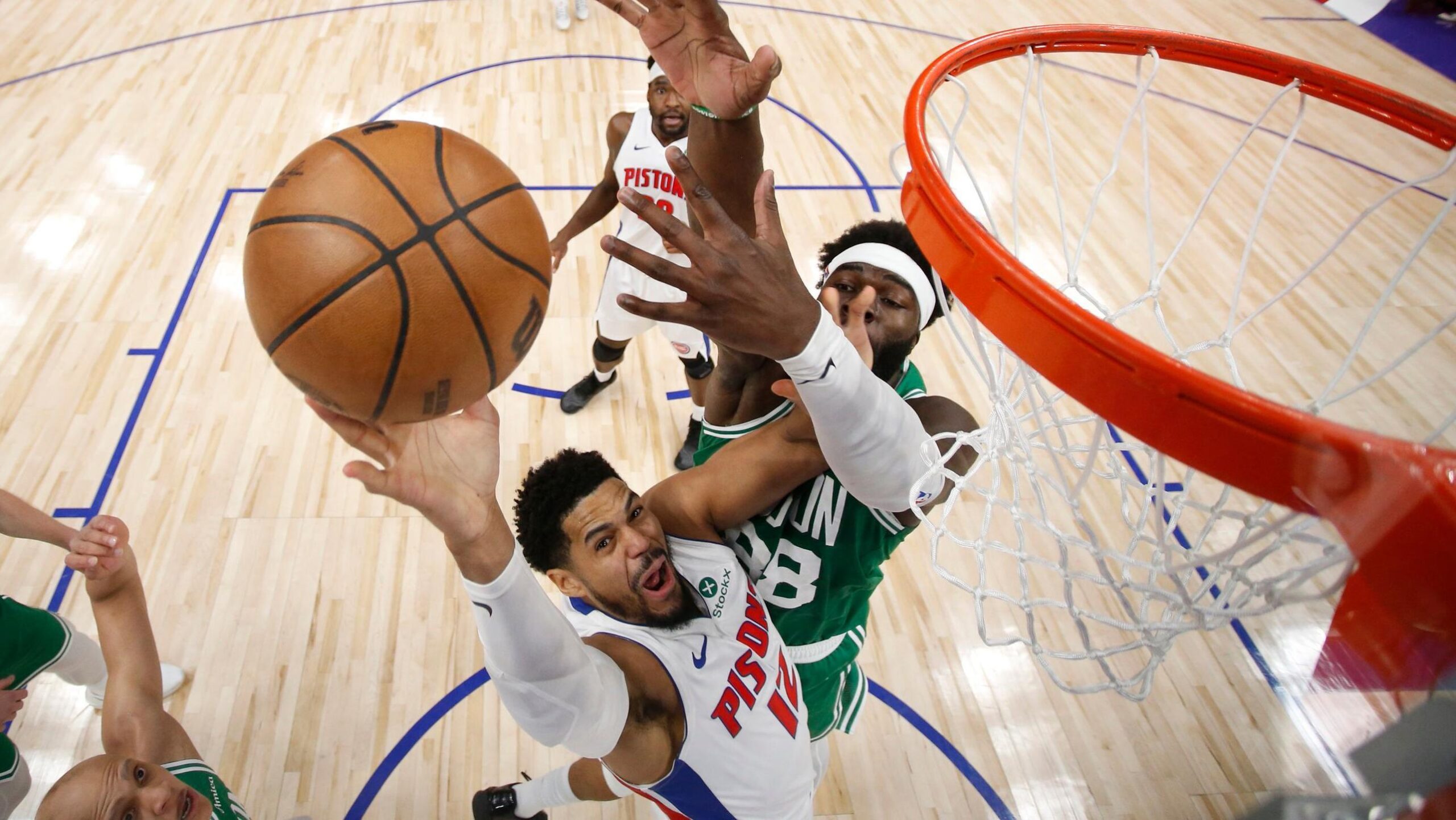
The final minutes of the game were a rollercoaster of emotions, filled with clutch shots and intense defensive possessions. With the score tied at 105-105 with under a minute remaining, Cunningham drove to the basket and converted a tough layup, giving the Pistons a two-point lead. Tatum responded with a contested jumper to tie the game once again. With seconds ticking away, the Pistons inbounded the ball to Cunningham, who calmly dribbled towards the basket and pulled up for a game-winning jump shot over Tatum. The shot swished through the net as the buzzer sounded, sending the Pistons’ fans into a frenzy.
The Celtics had one last chance to tie or win the game, but their inbound play was disrupted by Thompson, forcing a difficult shot that missed the mark. The Pistons’ ability to execute in the clutch, both offensively and defensively, proved to be the difference in this tightly contested game. The Celtics’ inability to get a clean look on their final possession highlighted the Pistons’ defensive intensity and attention to detail.
Tactical Adjustments and Coaching Decisions
Coach made several key tactical adjustments throughout the game that contributed to the Pistons’ victory. He recognized the Celtics’ reliance on Tatum and Brown and implemented a defensive scheme that focused on disrupting their rhythm and forcing them into difficult shots. He also made effective use of his bench, rotating players in and out to keep them fresh and maintain a high level of intensity on both ends of the court. Furthermore, his decision to put the ball in Cunningham’s hands in the final seconds proved to be a masterstroke, as the young star delivered a game-winning shot.
The Celtics’ coach also made adjustments, but they were ultimately not enough to overcome the Pistons’ determined effort. He attempted to counter the Pistons’ defensive pressure by running more pick-and-roll actions and isolating Tatum and Brown in favorable matchups. However, the Pistons’ defensive rotations and help defense consistently disrupted these efforts. His decision to stick with a smaller lineup in the fourth quarter may have also contributed to the Pistons’ success, as they were able to exploit mismatches and control the boards.
Looking Ahead: Implications for Both Teams
This victory is a significant boost for the Pistons’ confidence and a clear indication of their potential. It demonstrates that they can compete with the best teams in the league when they play with intensity, focus, and a well-defined game plan. Moving forward, the Pistons will need to build on this success and continue to develop their young core. With Cunningham leading the way, they have the potential to become a major force in the Eastern Conference.
For the Celtics, this loss serves as a valuable lesson. It highlights the importance of consistency and the need to avoid complacency. They cannot afford to rely solely on the individual brilliance of Tatum and Brown. They need to develop a more balanced offensive attack and improve their defensive rotations. This defeat should serve as a wake-up call and motivate them to address their weaknesses as they continue their quest for an NBA championship.
FAQ Section
What was the key to the Pistons’ victory over the Celtics?
The Pistons’ victory was a result of a combination of factors, including their balanced offensive attack, aggressive defensive scheme, and clutch execution in the final minutes. They successfully disrupted the Celtics’ rhythm, limited their three-point opportunities, and made key plays down the stretch.
How did Cade Cunningham perform in this game?
Cade Cunningham had a stellar performance, showcasing his all-around game with . He scored efficiently, created opportunities for his teammates, and defended at a high level. His game-winning shot cemented his status as a clutch performer.
What adjustments did the Pistons make defensively to contain the Celtics?
The Pistons employed a variety of defensive looks, including switching pick-and-rolls and trapping Jayson Tatum and Jaylen Brown in the corners. They also focused on controlling the paint and limiting the Celtics’ three-point opportunities with diligent closeouts and contested shots.
What can the Celtics learn from this loss?
The Celtics can learn the importance of consistency and the need to avoid complacency. They need to develop a more balanced offensive attack and improve their defensive rotations. This loss should serve as a wake-up call and motivate them to address their weaknesses.
What are the Pistons’ playoff chances after this win?
While it’s still early in the season, this victory significantly boosts the Pistons’ confidence and improves their playoff outlook. It demonstrates that they can compete with the best teams in the league and have the potential to make a deep run in the playoffs.