
Decoding the Cavaliers’ Collapse: A Statistical Breakdown of the Thunder Debacle
The Cleveland Cavaliers suffered a humbling 136-104 loss to the Oklahoma City Thunder on January 20, 2026, a defeat that exposed glaring weaknesses on both ends of the court. While every loss stings, the magnitude of this one demands a closer examination. This wasn’t just a bad night; it was a statistical avalanche that buried the Cavs. Let’s dissect the 11 key stats that tell the story of Cleveland’s one-sided defeat.
1. Oklahoma City’s Offensive Efficiency: A Torrid Pace
The Thunder’s offensive rating for the game was a staggering 132.0. This figure represents the points scored per 100 possessions, and anything above 120 is considered elite. Cleveland simply had no answer for Oklahoma City’s crisp ball movement, aggressive drives, and accurate shooting. They consistently found open looks and capitalized on defensive lapses.
2. Three-Point Shooting Disparity: Thunderstorms from Deep
Oklahoma City shot a blistering 48.6% from beyond the arc (17-for-35), while Cleveland struggled, converting only 32.1% of their three-point attempts (9-for-28). This 16.5% difference represents a massive 24-point swing based solely on three-point efficiency. The Thunder’s perimeter players punished Cleveland’s help defense, making them pay for every rotation.
3. Shai Gilgeous-Alexander’s Dominance: A One-Man Wrecking Crew
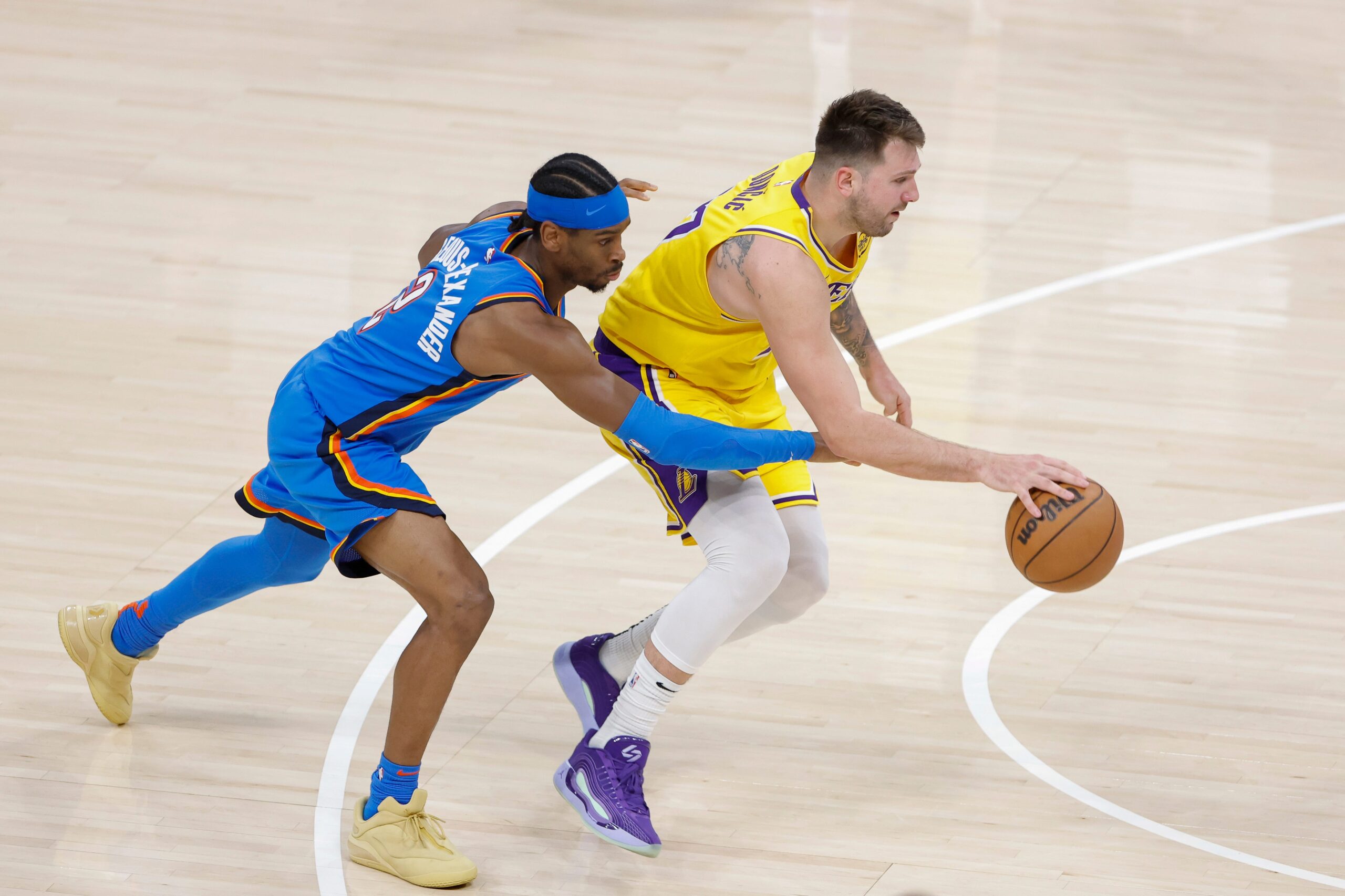
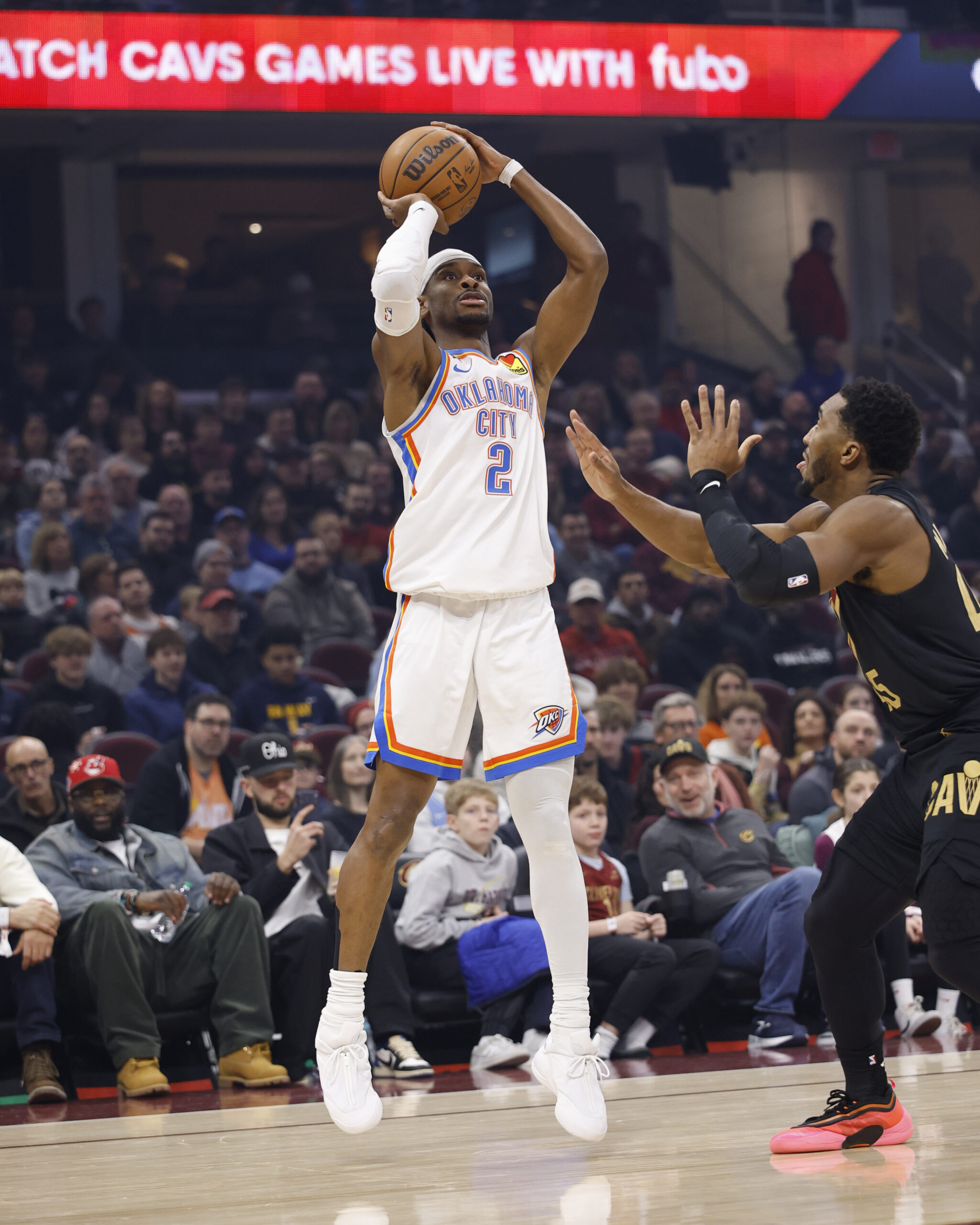
Shai Gilgeous-Alexander (SGA) led all scorers with 34 points on an incredibly efficient 12-of-18 shooting. He also added 7 assists and 5 rebounds. SGA consistently broke down the Cavs’ defense with his crafty drives and smooth pull-up jumpers. Cleveland’s perimeter defenders, particularly Darius Garland, struggled to contain his relentless attacks.
4. Rebounding Woes: Losing the Battle of the Boards
The Thunder outrebounded the Cavaliers 48-36. This discrepancy highlights Cleveland’s struggles on the glass, particularly on the defensive end. Second-chance points are momentum killers, and Oklahoma City capitalized on their rebounding advantage, extending possessions and wearing down the Cavs’ defense.
5. Points in the Paint: Oklahoma City’s Interior Assault
Oklahoma City dominated the paint, outscoring Cleveland 58-40. This statistic reveals Cleveland’s inability to protect the rim and contain the Thunder’s penetration. Jarrett Allen and Evan Mobley, typically reliable rim protectors, were often caught out of position or simply overpowered by the Thunder’s aggressive drivers.
6. Assist Disparity: Ball Movement Matters
The Thunder recorded 32 assists compared to the Cavaliers’ 22. This difference underscores Oklahoma City’s superior ball movement and offensive cohesion. They consistently found the open man, creating easy scoring opportunities. Cleveland’s offense, on the other hand, often stagnated, relying too heavily on individual isolation plays.
7. Donovan Mitchell’s Inefficiency: A Rare Off Night
While Donovan Mitchell scored 26 points, he did so on a relatively inefficient 9-of-22 shooting. He also committed 4 turnovers. Mitchell, typically Cleveland’s offensive catalyst, struggled to find his rhythm against the Thunder’s aggressive defense. His inability to generate easy looks for himself and his teammates contributed to the Cavs’ offensive woes.
8. Bench Production: Thunder’s Second Unit Shines
Oklahoma City’s bench outscored Cleveland’s bench 48-32. This difference highlights the depth of the Thunder’s roster and the struggles of Cleveland’s second unit to provide a spark. The Thunder’s reserves maintained the team’s offensive momentum and defensive intensity when the starters rested, while Cleveland’s bench struggled to make a significant impact.
9. Fast Break Points: Thunder’s Transition Prowess
The Thunder scored 22 fast break points compared to the Cavaliers’ 8. This statistic reveals Cleveland’s inability to control the tempo of the game and prevent Oklahoma City from generating easy baskets in transition. The Thunder capitalized on turnovers and missed shots, pushing the pace and exploiting Cleveland’s defensive vulnerabilities.
10. Turnovers: Costly Mistakes Plague Cleveland
The Cavaliers committed 16 turnovers, which led to 20 points for the Thunder. These turnovers were often unforced errors, such as errant passes and offensive fouls. Oklahoma City capitalized on these mistakes, converting them into easy scoring opportunities and further extending their lead.
11. Defensive Intensity: A Clear Advantage for Oklahoma City
While difficult to quantify with a single stat, the Thunder’s overall defensive intensity was noticeably higher than Cleveland’s. They contested shots, disrupted passing lanes, and forced turnovers. The Cavaliers, on the other hand, often appeared passive and lacked the necessary urgency to contain Oklahoma City’s potent offense. This lack of defensive intensity allowed the Thunder to dictate the flow of the game and control the score.
FAQ Section
Why did the Cavaliers lose by such a large margin to the Thunder?
The Cavaliers’ lopsided loss to the Thunder can be attributed to a combination of factors, including Oklahoma City’s exceptional offensive efficiency, Cleveland’s struggles with three-point shooting and rebounding, Shai Gilgeous-Alexander’s dominant performance, and the Cavaliers’ overall lack of defensive intensity. The Thunder simply outplayed the Cavs in nearly every aspect of the game.
What adjustments can the Cavaliers make to avoid similar losses in the future?
To prevent similar defeats, the Cavaliers need to improve their perimeter defense, particularly against quick and shifty guards like Gilgeous-Alexander. They also need to address their rebounding issues, focusing on boxing out and securing defensive rebounds. Furthermore, the Cavaliers need to improve their ball movement and offensive cohesion to avoid relying too heavily on isolation plays. Greater bench contributions and fewer turnovers are also crucial.
Was Donovan Mitchell’s performance a major factor in the Cavaliers’ loss?
While Donovan Mitchell scored 26 points, his efficiency was below his usual standards. His struggles to find his rhythm and generate easy looks for himself and his teammates certainly contributed to the Cavaliers’ offensive woes. However, it’s important to note that the loss was a team effort, and Mitchell was not solely responsible for the defeat.
How important was the Thunder’s three-point shooting in their victory?
The Thunder’s exceptional three-point shooting was a significant factor in their victory. Their ability to consistently knock down shots from beyond the arc stretched the Cavaliers’ defense and created opportunities for penetration. The 16.5% difference in three-point shooting percentage between the two teams represents a massive point swing and highlights the importance of perimeter shooting in today’s NBA.
What does this loss say about the Cavaliers’ championship aspirations?
While this loss was certainly a setback, it’s important not to overreact. Every team experiences bad nights, and the Cavaliers have the talent and experience to bounce back. However, this defeat serves as a reminder that they need to address their weaknesses and improve their consistency if they want to be considered true championship contenders. They need to tighten up their defense, improve their rebounding, and find ways to generate more consistent offensive production from their entire roster.