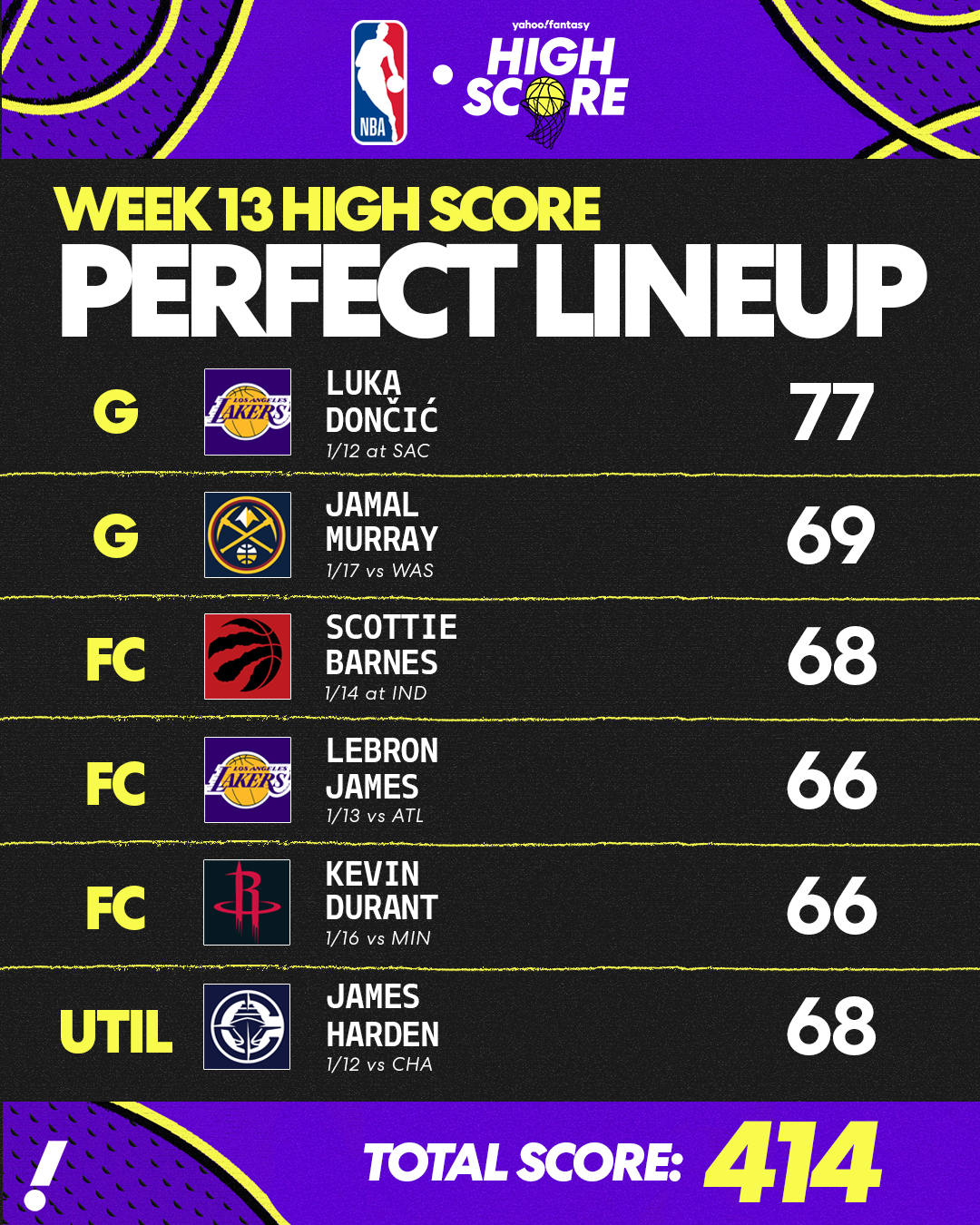
Fantasy Basketball Week 13: Decoding the Perfect Lineup Amidst an Offensive Slump
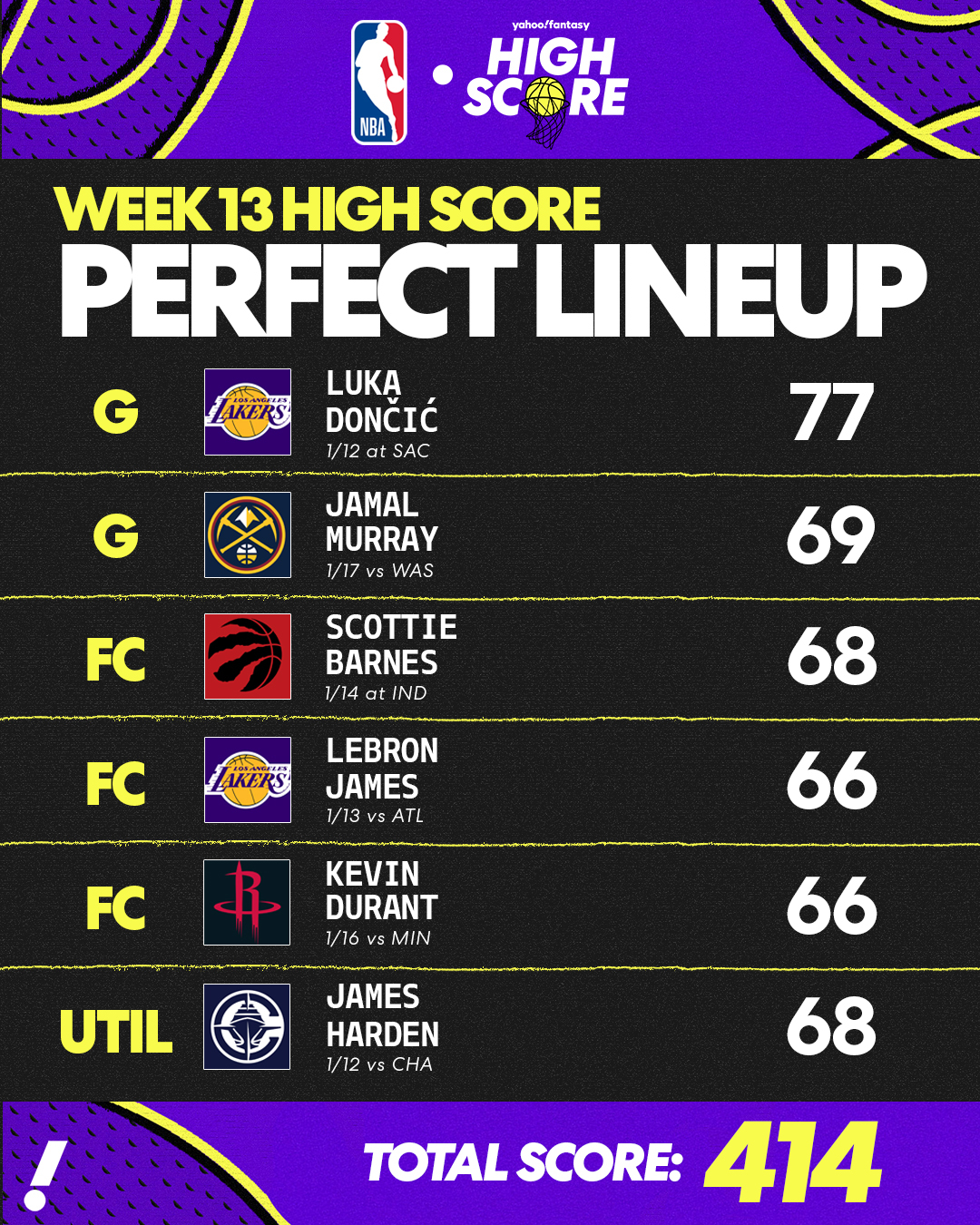
Week 13 of the NBA season proved to be a perplexing one for fantasy basketball managers. Across the league, scoring seemed to dip, leaving many scrambling to adjust their lineups and strategies. This analysis delves into the ideal lineup construction for the week, dissecting the performances of the players who defied the trend and delivered exceptional fantasy value. We’ll explore the factors that contributed to the lower scoring environment and offer insights into how to navigate similar situations in the future.
The Landscape of Week 13: A League-Wide Offensive Dip
Before diving into the specific players who comprised the perfect lineup, it’s crucial to understand the broader context of Week 13. Several factors appeared to contribute to the league-wide offensive struggles. Increased defensive intensity, perhaps a natural consequence of teams gearing up for the playoff push, played a role. Furthermore, injuries to key offensive players on several teams forced coaches to adjust their game plans, often prioritizing ball control and limiting possessions. The schedule itself, with some teams playing multiple games against defensively stout opponents, also influenced the overall scoring output.
The impact was felt across various fantasy formats. Standard leagues saw lower point totals, while even in points leagues, managers had to contend with unexpected duds from normally reliable scorers. This week served as a stark reminder of the importance of adaptability and staying informed about player injuries and matchups.
Analyzing the Perfect Lineup: Who Beat the Odds?
Identifying the “perfect lineup” requires considering various factors, including positional scarcity, overall fantasy point production, and cost-effectiveness (particularly in DFS formats). While specific scoring systems vary across different fantasy platforms, the core principle remains the same: selecting players who maximize their statistical output relative to their availability and perceived value.
Let’s break down the key positions and highlight players who likely anchored the winning lineups:
Point Guard: Shai Gilgeous-Alexander (Oklahoma City Thunder)
Even in a week of lower scoring, Shai Gilgeous-Alexander remained a consistent force. His ability to score efficiently, rack up assists and steals, and contribute across multiple categories makes him a perennial fantasy stud. His usage rate in the Thunder’s offense ensures a high floor, and his occasional explosive performances provide the upside needed to anchor a winning lineup. Gilgeous-Alexander is a prime example of a player who transcends matchup concerns, consistently delivering elite production regardless of the opponent.
His performance this past week underlines his status as a top-tier fantasy option. His ability to draw fouls and convert free throws adds another layer of consistency to his scoring profile.
Shooting Guard: Anthony Edwards (Minnesota Timberwolves)
Anthony Edwards’ explosive athleticism and improving offensive skillset make him a dynamic fantasy asset. This week, he likely benefited from increased opportunities due to Karl-Anthony Towns’ absence (if Towns was indeed out). Edwards has demonstrated the ability to take over games, and his aggressiveness in attacking the basket translates to high scoring totals and a decent number of free throw attempts. While his three-point shooting can be streaky, his overall offensive impact is undeniable.
Edwards’ defensive contributions, particularly steals, also provide a valuable boost in fantasy leagues that reward defensive stats. His continued development suggests that he has the potential to become an even more dominant fantasy force in the future.
Small Forward: LeBron James (Los Angeles Lakers)
Despite being in his 21st season, LeBron James continues to defy Father Time and deliver exceptional fantasy value. His all-around game, characterized by scoring, rebounding, assists, and defensive contributions, makes him a highly coveted player in all fantasy formats. Even on nights when his scoring isn’t at its peak, he consistently fills up the stat sheet in other categories. The Lakers’ reliance on James as their primary playmaker and scorer ensures a high usage rate and ample opportunities to produce.
James’ basketball IQ and court vision allow him to consistently make the right plays, leading to assists and contributing to the overall flow of the Lakers’ offense. His leadership and experience are invaluable assets both on and off the court.
Power Forward: Giannis Antetokounmpo (Milwaukee Bucks)
Giannis Antetokounmpo is a dominant force in both real life and fantasy basketball. His combination of size, strength, and athleticism is unparalleled, making him a nightmare matchup for opposing defenses. He consistently scores at a high rate, rebounds effectively, and contributes blocks and steals on the defensive end. The Bucks’ offense revolves around Antetokounmpo’s ability to attack the basket and create opportunities for his teammates.
While his free-throw shooting can be a weakness, his overall impact is so significant that it rarely outweighs his positive contributions. Antetokounmpo is a consistent threat to record triple-doubles, further enhancing his fantasy value.
Center: Nikola Jokic (Denver Nuggets)
Nikola Jokic, the reigning NBA MVP (likely referencing a hypothetical future MVP award in 2026), is a unique talent who redefines the center position. His exceptional passing skills, combined with his scoring prowess and rebounding ability, make him a triple-double threat every night. Jokic’s court vision and basketball IQ are unmatched, allowing him to consistently make the right reads and create scoring opportunities for his teammates. The Nuggets’ offense runs through Jokic, and his ability to facilitate and score makes him an invaluable asset.
Jokic’s defensive contributions, while not as flashy as some other centers, are steadily improving. His ability to anticipate plays and disrupt passing lanes contributes to his overall defensive impact.
Flex Positions: Identifying Value and Opportunity
The flex positions in fantasy lineups provide an opportunity to capitalize on undervalued players or those who are experiencing temporary spikes in production due to injuries or favorable matchups. In a week of lower scoring, identifying these value plays becomes even more critical.
Potential flex candidates for the perfect lineup in Week 13 might have included players like:
* **A player benefiting from increased playing time due to injury:** For example, if a key player on a team was sidelined, their replacement might have seen a significant increase in minutes and usage, leading to improved fantasy production.
* **A player with a favorable matchup:** Targeting players facing teams known for their poor defense against specific positions can be a viable strategy.
* **A player on a hot streak:** Sometimes, players simply get into a rhythm and experience a temporary surge in performance. Identifying these players early can provide a significant advantage.
The specific players who filled the flex positions in the perfect lineup would have depended on the particular circumstances of Week 13, including injuries, matchups, and individual player performances. However, the key principle remains the same: identifying undervalued players who are poised to exceed expectations.
Waiver Wire Wonders and DFS Strategies
Navigating a week of lower scoring requires a proactive approach to the waiver wire and a strategic mindset in DFS contests.
Waiver Wire
The waiver wire is a crucial resource for identifying players who can provide immediate value. In Week 13, potential waiver wire targets might have included players who were recently dropped due to slumps or those who were benefiting from increased playing time due to injuries. Monitoring team news and injury reports is essential for identifying these opportunities.
DFS Strategies
In DFS, building a winning lineup requires careful consideration of player salaries, matchups, and projected ownership percentages. In a week of lower scoring, focusing on players with high floors and guaranteed minutes becomes even more important. Targeting players with favorable matchups and low ownership percentages can also provide a significant edge.
Another strategy is to look for players who are likely to benefit from increased usage due to injuries or lineup changes. These players often represent excellent value at their respective price points.
Lessons Learned: Adapting to Fluctuations in Scoring
Week 13 served as a valuable reminder of the importance of adaptability in fantasy basketball. The lower scoring environment highlighted the need to be proactive in identifying value plays, monitoring injury reports, and adjusting strategies based on the specific circumstances of each week. By staying informed and embracing flexibility, fantasy managers can navigate these fluctuations and maximize their chances of success.
The key takeaways from Week 13 include:
* **Don’t panic:** Scoring ebbs and flows throughout the season. Don’t make rash decisions based on one week’s results.
* **Stay informed:** Monitor injury reports and team news closely to identify potential value plays.
* **Be flexible:** Adjust your strategies based on the specific circumstances of each week.
* **Focus on efficiency:** In lower-scoring environments, efficiency becomes even more important. Target players who score efficiently and contribute across multiple categories.
* **Consider defensive matchups:** Pay attention to defensive matchups and target players facing teams known for their poor defense against specific positions.
FAQ: Navigating Fantasy Basketball Challenges
What should I do if my key players are underperforming?
First, assess the situation objectively. Is it a temporary slump, or is there a more significant issue, such as an injury or a change in role? If it’s a temporary slump, be patient and give them time to bounce back. If there’s a more serious issue, consider trading them or replacing them with a waiver wire pickup.
How important are defensive stats in fantasy basketball?
Defensive stats (steals and blocks) can be extremely valuable, especially in leagues that heavily weight them. They provide a consistent source of points and can often be the difference between winning and losing a matchup. Target players who consistently rack up steals and blocks, as they can provide a significant edge.
What’s the best way to manage my roster during the NBA playoffs?
Managing your roster during the NBA playoffs requires a different approach than the regular season. Focus on players who are guaranteed to play significant minutes and who are integral to their team’s success. Be wary of players who are prone to inconsistent playing time or who are facing tough matchups. Also, pay close attention to team schedules, as some teams may have more games than others during certain playoff rounds.
How can I improve my understanding of NBA player statistics?
There are numerous resources available to help you improve your understanding of NBA player statistics. Websites like Basketball-Reference provide comprehensive stats on every player in the league. You can also find valuable insights and analysis on websites like ESPN and Rotoworld. Following NBA analysts and experts on social media can also provide valuable insights and perspectives.
What is the best fantasy basketball format for beginners?
Head-to-head leagues are generally considered the best format for beginners. In head-to-head leagues, you compete against one other team each week, and the winner is determined by who wins the most statistical categories. This format is relatively easy to understand and provides a good introduction to the world of fantasy basketball.